
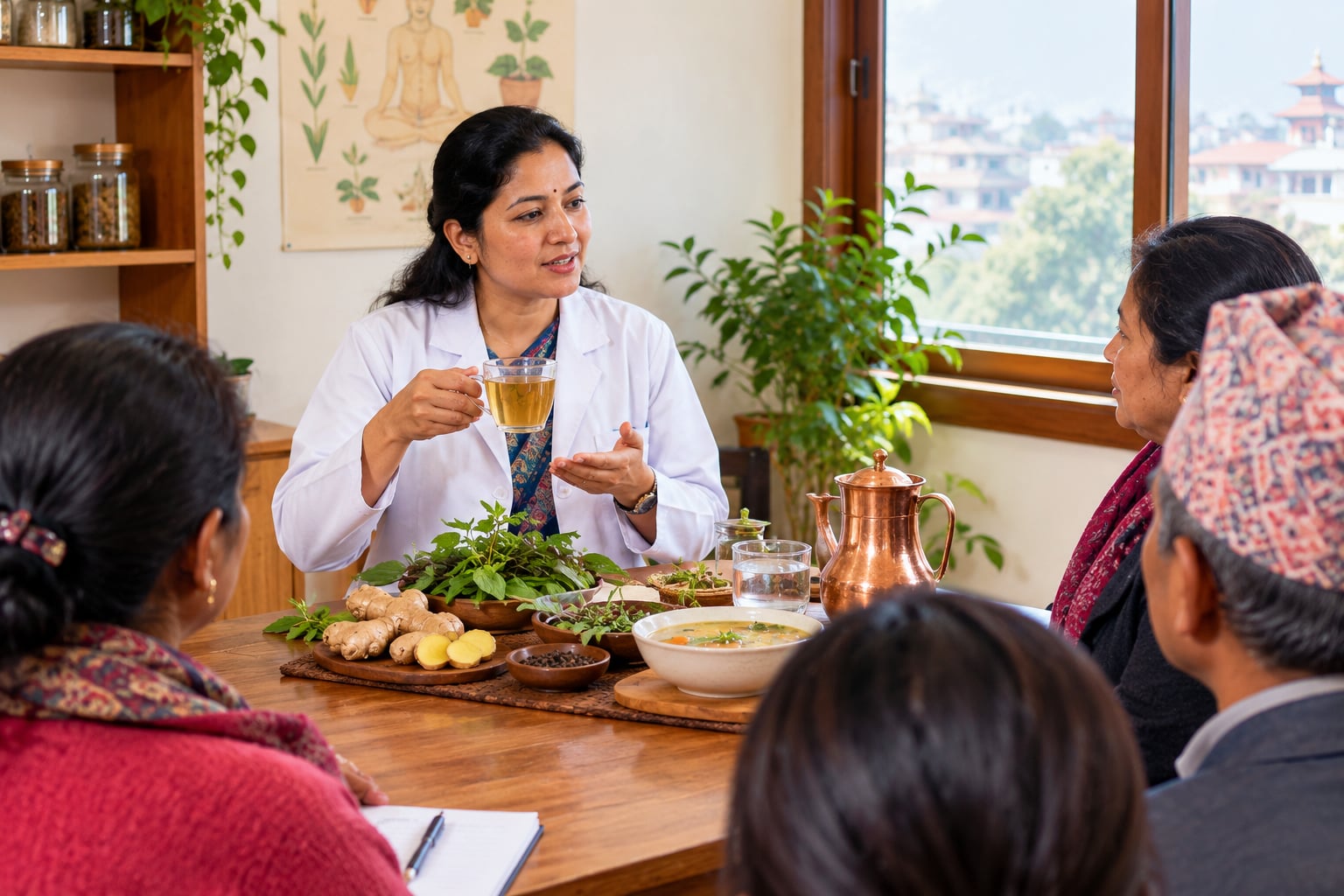
Understanding Fever in Ayurveda
In Ayurveda, fever is called Jwara, and classical texts consider it the foremost among diseases. Most viral fevers resemble Agantuja or Sannipata-type Jwara, in which the body’s digestive fire (Agni) weakens, undigested matter (Ama) accumulates, and the doshas become imbalanced. This blocks the channels (srotas), and the body responds with heat, body ache and heaviness.
Common Symptoms
Fever with chills or body ache Headache and heaviness of the body Loss of appetite and thirst Sore throat, cough or runny nose Weakness and fatigue
Core Principles of Management
Langhana (lightening therapy): Reducing the quantity and heaviness of food gives the digestive system rest. This is the first principle in early fever. Pachana (digestion of Ama): Warm, digestive and mildly bitter substances help the body process Ama. Rest (Vishrama): Avoiding exertion, late nights and exposure to cold wind helps recovery. Hydration: Warm or lukewarm water in small, frequent sips is essential. Fluid loss is the main risk in fever.
Pathya (Helpful Diet and Habits)
Rice gruel (Peya, Vilepi), thin moong dal soup (Mudga yusha) and lightly cooked, warm food Lukewarm water, or water boiled with dry ginger or coriander Fresh, light, home-cooked meals once appetite returns Adequate sleep at night and calm surroundings
Apathya (To Avoid)
Heavy, oily, fried, spicy or fermented food Curd, cold drinks, ice cream and cold water Daytime sleep, exertion, anger and stress Exposure to cold wind and getting wet in the rain
Simple Home Support
Tulsi, ginger and black pepper decoction: traditionally used for cough, cold and mild fever Dhanyaka-Shunthi water (coriander and dry ginger): a gentle, digestion-supporting drink Guduchi (Tinospora cordifolia): a classical herb for recurrent and lingering fevers Warm water gargles for sore throat
Classical Formulations (Under Physician Guidance) Formulations such as Sudarshan Churna, Mahasudarshan Ghan Vati, Guduchi Ghan Vati and Tribhuvan Kirti Rasa are traditionally prescribed for different types of Jwara. Choice and dose depend on the person’s constitution, stage of illness, age and other conditions, so they should be taken only on the advice of a qualified Ayurvedic physician.
After the Fever: Recovery Weakness often remains after fever. Return to regular food slowly, take freshly cooked, easily digested meals, and avoid overexertion for a few days. A physician may advise Rasayana (rejuvenating) support to rebuild strength and immunity.
Prevention
Follow a regular daily routine (Dinacharya) and sleep on time Eat fresh, warm, seasonal food Wash hands, cover coughs, and avoid close contact with sick people Keep surroundings free of stagnant water, especially in monsoon and autumn, to reduce mosquito-borne illness
When to See a Doctor Immediately Not every fever is a simple viral fever. In Nepal, dengue and other infections are common in the post-monsoon season, and they can look similar at first. Seek medical care promptly if there is:
Fever lasting more than 2–3 days, or a very high fever Severe headache, pain behind the eyes, or severe body or joint pain Rash, bleeding from the gums or nose, or black stools Persistent vomiting, severe abdominal pain, or inability to drink fluids Breathlessness, confusion, extreme drowsiness or fits Fever in infants, young children, pregnant women, the elderly, or people with diabetes, heart or kidney disease
Conclusion Ayurveda offers a gentle, supportive approach to viral fever: light diet, rest, hydration and digestion-supporting measures. These work best alongside timely medical evaluation, not in place of it. Consult a qualified physician for a proper diagnosis and an individualized treatment plan.
Disclaimer: This article is for educational purposes only and is not a substitute for professional medical advice, diagnosis or treatment.
Tags & Categories
Read on Official Blogspot Archive
Published on drpratibhatripathi.blogspot.com with reader comments and discussions.

Clinical Practitioner
Dr. Pratibha Tripathi
Assistant Professor · PhD Scholar · Senior Ayurveda Consultant. Over 14 years integrating classical Ayurveda with modern scientific enquiry in Kathmandu, Nepal.
Medical Disclaimer: This clinical article is published for educational and awareness purposes. Please consult Dr. Pratibha Tripathi for individualized Ayurvedic diagnosis, herbal dosages, and lifestyle guidance.
Stay Updated
Receive periodic Ayurvedic research summaries, clinical insights, and seasonal wellness notes from Dr. Pratibha Tripathi.