
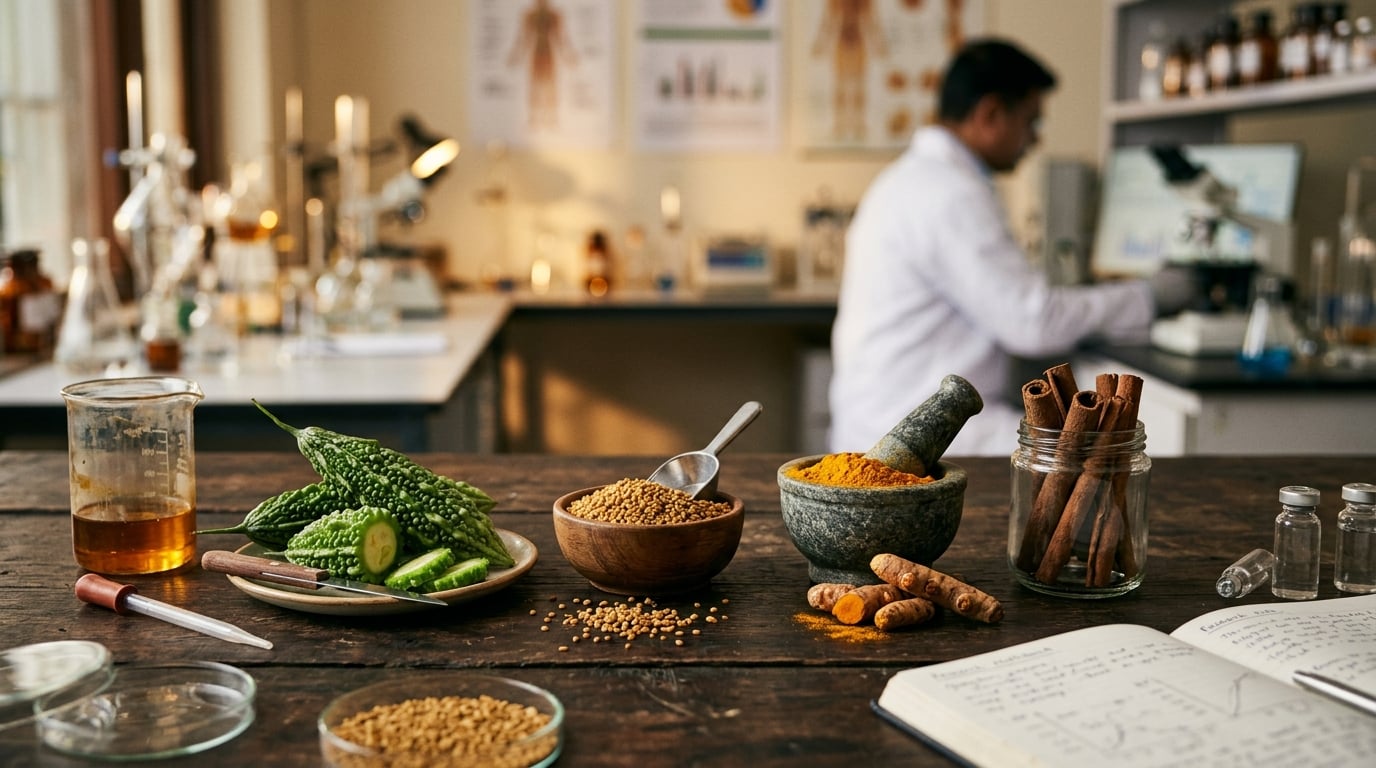
Type 2 Diabetes Mellitus (T2DM) has reached epidemic proportions across Nepal and South Asia, driven by rapid urbanization, refined high-glycemic carbohydrates, chronic psychological distress, and physical inactivity. Conventional medical care primarily focuses on continuous blood glucose lowering through biguanides, sulfonylureas, SGLT2 inhibitors, and exogenous insulin.
However, while pharmaceutical lowering of blood glucose is critical, it frequently fails to resolve the underlying metabolic endotoxemia, progressive beta-cell apoptosis, microvascular endothelial damage, and peripheral insulin resistance. Over time, patients often require escalating medication dosages while continuing to experience long-term vascular complications.
In the classical Ayurvedic medical canon, diabetes is systematically analyzed under the comprehensive framework of Prameha (polyuric metabolic disorders) and its chronic culmination, Madhumeha (sweet urine / glucosuria), documented with profound clinical insight in the treatises of Charaka and Sushruta.
1. Etiological Architecture & Pathogenesis of Prameha
The ancient Ayurvedic physician Acharya Charaka classified Prameha into twenty distinct clinical varieties based on doshic dominance (10 Kaphaja, 6 Pittaja, and 4 Vataja). Over time, all untreated forms of Prameha progress toward irreversible Vataja Madhumeha.
The Classical Disease Cascade:
- Primary Causes (Nidana): Overindulgence in sedentary habits (Asyasukha), excessive day sleeping (Swapnasukha), heavy consumption of curd, unpasteurized cow's milk products, newly harvested grains (Navanna), sweetened foods, and liquid overconsumption.
- Medovaha Srotas Dysfunction: Vitiated Kapha and liquid Pitta blend with unrefined adipose tissue (Meda Dhatu), muscle tissue (Mamsa), and body fluids (Kleda), leading to profound micro-vascular and metabolic channel congestion (Srotorodha).
- Cellular Energy Depletion (Ojas Kshaya): As insulin resistance prevents glucose from entering skeletal myocytes and hepatocytes, cellular starvation ensues. In Ayurvedic terms, the quintessential biological essence of all tissues—Ojas—is depleted and excreted through the urinary tract, leading to fatigue, weight loss, and susceptibility to infections.
- Vascular Endotoxin Fixation: Ama and unrefined sugars bind to vascular collagen, manifesting advanced glycation end-products (AGEs) that harden systemic micro-capillaries.
2. Clinical Phytotherapy and Validated Formulations
Ayurvedic pharmacotherapy for Type 2 Diabetes employs herbal agents with bitter (Tikta), astringent (Kashaya), and dry (Ruksha) attributes to digest Ama, clear adipose obstruction, and regenerate pancreatic islet tissue:
- Nisha-Amalaki: A foundational clinical combination of Curcuma longa (Turmeric) and Phyllanthus emblica (Amalaki). Curcumin suppresses advanced glycation end-products (AGEs), while the potent hydrolyzable tannins and vitamin C in Amalaki protect pancreatic beta cells against oxidative damage.
- Meshashringi (Gymnema sylvestre): Known classically as Gurmar ("Destroyer of Sugar"). The active gymnemic acids temporarily block intestinal sugar absorption receptors, regenerate pancreatic beta-cell islets, and enhance endogenous insulin secretion.
- Vijaysar (Pterocarpus marsupium): The flavonoid component epicatechin has been extensively demonstrated in pharmacological research to prevent beta-cell degranulation and promote pancreatic tissue repair.
- Vasant Kusumakar Rasa: A revered classical herbo-mineral formulation incorporating purified gold (Swarna Bhasma), silver, and pearls, indicated in chronic, complicated diabetes with diabetic neuropathy, retinopathy, or microalbuminuria.
- Chandraprabha Vati: Reduces microalbuminuria, eliminates frequent nocturnal urination, and strengthens renal filtration tubules.
- Mamejava (Enicostemma littorale): A potent bitter alpine herb proven in clinical trials to enhance circulating serum insulin levels and suppress lipid peroxidation in diabetic models.
3. Panchakarma Protocols for Diabetic Reversal
- Udvartana (Dry Herbal Scrub): Vigorous upward massage using warm powders of Triphala, Kolakulathadi, and chickpea flour. Clinical trials confirm that a 14-day course of daily Udvartana reduces visceral circumference, mobilizes stagnant subcutaneous fat, and upregulates peripheral insulin sensitivity.
- Virechana (Therapeutic Purgation): Eliminates deep-seated Kapha-Pitta toxins from the liver and pancreatic biliary tract, resetting basal hepatic insulin resistance.
- Lekhana Basti (Scraping Enemas): Administering medicated decoctions containing Triphala, Gomutra, honey, and rock salt to clear systemic lipid and metabolic stagnation.
- Takradhara (Medicated Buttermilk Forehead Flow): Indicated in stress-induced hyperglycemia, downregulating hypothalamic sympathetic hyperarousal and stabilizing morning cortisol spikes.
4. Clinical Nutrition & Lifestyle Prescription
- Ahara (Diet): Replace white rice and wheat with ancient Yava (Barley), finger millet (Kodo), and roasted gram flour (Sattu). Incorporate bitter vegetables daily: bitter gourd (Karela), drumstick (Shigru), fenugreek greens (Methi), and pointed gourd (Parwal).
- Fenugreek Seed Protocol: Soaking 10g of fenugreek seeds in warm water overnight and consuming them in the morning provides high-viscosity galactomannan fiber, significantly flattening postprandial glucose curves.
- Vigorous Daily Exercise (Vyayama): Engaging in 45 minutes of brisk walking, cycling, or yogic Surya Namaskar to stimulate non-insulin-mediated glucose uptake via AMP-activated protein kinase (AMPK) activation in skeletal muscles.
- Cinnamon Water Therapy: Simmering Ceylon cinnamon bark in water daily enhances cellular glucose transporter translocation and reduces fasting serum insulin.
5. Summary & Prognosis
Through precise clinical diagnosis, evidence-based Himalayan phytotherapy, and structured dietary discipline, Ayurvedic medicine achieves glycemic stabilization, prevents microvascular complications, and in many early-stage cases, restores natural metabolic equilibrium.
Tags & Categories
Read on Official Blogspot Archive
Published on drpratibhatripathi.blogspot.com with reader comments and discussions.

Clinical Practitioner
Dr. Pratibha Tripathi
Assistant Professor · PhD Scholar · Senior Ayurveda Consultant. Over 14 years integrating classical Ayurveda with modern scientific enquiry in Kathmandu, Nepal.
Medical Disclaimer: This clinical article is published for educational and awareness purposes. Please consult Dr. Pratibha Tripathi for individualized Ayurvedic diagnosis, herbal dosages, and lifestyle guidance.
Stay Updated
Receive periodic Ayurvedic research summaries, clinical insights, and seasonal wellness notes from Dr. Pratibha Tripathi.