
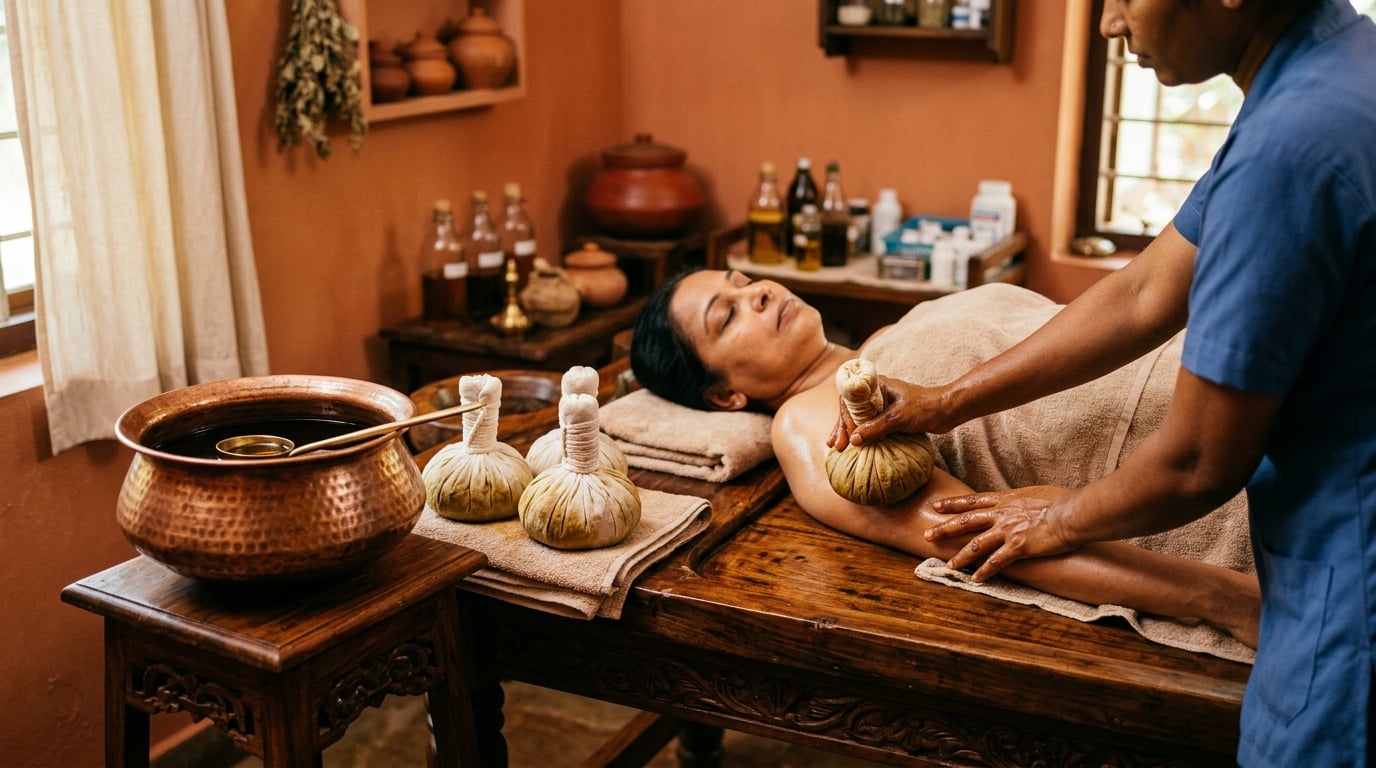
In contemporary internal medicine, chronic metabolic syndrome, non-alcoholic fatty liver disease (NAFLD), type 2 diabetes mellitus, and systemic autoimmune disorders (such as Hashimoto's thyroiditis and rheumatoid arthritis) share a common pathophysiological substrate: cellular mitochondrial congestion, impaired autophagy, and chronic low-grade systemic inflammation.
Conventional pharmacological management often relies on lifelong symptom suppression—administering statins, oral hypoglycemics, anti-inflammatories, or biological immunosuppressants. While these drugs manage acute biomarkers, they rarely address the fundamental burden of cellular metabolic stagnation.
In classical Ayurvedic medicine, this pervasive systemic failure is categorized as Dhatvagni Mandya (derangement of tissue-level enzymatic and metabolic fires), which directly generates Ama—toxic, unesterified macromolecular intermediates that obstruct micro-vascular and lymphatic channels (Srotorodha).
Classical Panchakarma (the fivefold bio-cleansing therapeutic paradigm) is not a relaxing spa retreat; it is an intensive, inpatient and outpatient hospital-grade medical intervention designed to mobilize and expel lipophilic toxins that have accumulated deep within interstitial matrices and cellular membranes.
1. The Three-Phase Physiological Architecture of Panchakarma
True Panchakarma protocols follow a rigorous tripartite clinical progression: Purva Karma (preparatory phase), Pradhana Karma (primary cleansing interventions), and Paschat Karma (post-cleansing rehabilitation and immunomodulation).
Phase 1: Purva Karma (Deep-Tissue Mobilization)
Without rigorous preparation, bio-cleansing procedures can damage bodily tissues (Snehana-Swedanaabhyam Shodhanam).
- Deepana & Pachana: Prior to any oleation, patients receive digestive stimulants such as Trikatu (ginger, black pepper, long pepper), Chitrakadi Vati, and Panchakola Kwath. This digests free-floating gastric Ama, ensuring that subsequent therapies do not drive toxins deeper into tissues.
- Abhyantara Snehana (Internal Oleation): Over 3 to 7 consecutive mornings, patients consume escalating doses of medicated lipid formulations (such as Indukanta Ghrita, Guggulutiktaka Ghrita, or Varanadi Ghrita) on an empty stomach. Biochemically, lipophilic environmental toxins (heavy metals, persistent organic pollutants, pesticides) stored within adipose tissue and lipid bilayer cell membranes dissolve into the circulating therapeutic lipid medium via equilibrium partition dynamics.
- Swedana (Induced Sudation): Full-body steam therapy utilizing herbal decoctions (Dashamoola, Nirgundi) dilates systemic micro-capillaries (Srotomukha Vishodhanam), liquefying mobilised toxins and driving them toward the primary gastrointestinal tract (Koshtha) for elimination.
2. Phase 2: Pradhana Karma (Targeted Elimination Therapies)
Depending on the patient's individual doshic constitution and specific organ pathology, specialized elimination procedures are deployed:
- Virechana (Therapeutic Purgation for Metabolic & Pitta Disorders):
- Utilizing herbal purgatives such as Trivrit Lehyam, Avipattikar Churna, or castor oil formulations, Virechana flushes the gallbladder, bile ducts, and small intestine.
- Clinical Outcomes: Studies demonstrate significant post-Virechana reductions in serum triglycerides, total cholesterol, alkaline phosphatase, and inflammatory C-reactive protein (hs-CRP). It resets hepatic lipid metabolism in non-alcoholic fatty liver disease.
- Basti (Targeted Medicated Enemas for Vata & Autoimmune Dysregulation):
- Often described in Charaka Samhita as constituting "half of all medical therapy" (Ardha Chikitsa), Basti is not a simple colonic irrigation.
- Niruha Basti (Decoction Enemas): An emulsion of honey, rock salt, medicated pastes (Kalka), herbal decoctions (such as Dashamoola or Erandamooladi), and medicated oil directly interacts with the enteric nervous system (ENS) and colonic mucosal gut microbiome.
- Anuvasana Basti (Oil Retention Enemas): Lipophilic nutrients (Sahacharadi Taila, Dhanwantaram Taila) are absorbed through the rectal venous plexus, bypassing first-pass hepatic metabolism and exerting systemic anti-inflammatory and neuromodulatory effects across the gut-brain-immune axis.
- Nasya (Intranasal Drug Administration):
- Administration of medicated oils (Anu Taila, Kshadbindu Taila) through the nasal passages directly reaches neurovascular structures via the cribriform plate, modulating neuroendocrine axes in autoimmune thyroiditis, chronic sinusitis, and pituitary dysfunction.
3. Phase 3: Paschat Karma (Samsarjana Krama & Rasayana)
Following intense bio-purification, the digestive fire (Jatharagni) is temporarily sensitive and delicate.
- Samsarjana Krama (Dietary Rehabilitation): A graduated nutritional regimen progressing from thin clear rice gruel (Manda), to thick gruel (Peya), semi-solid porridge (Vilepi), and light spiced lentil soup (Krit Yusha). This sequentially reignites gastric enzymatic secretion without overwhelming pancreatic and biliary capacity.
- Rasayana (Immunomodulatory Rejuvenation): Once biological channels are unobstructed, restorative compounds such as Guduchi (Tinospora cordifolia), Amalaki (Emblica officinalis), Shilajit, and Ashwagandha demonstrate superior bioavailability, accelerating cellular repair, restoring telomere stability, and enhancing cellular immunity (Ojas).
4. Published Clinical Evidence and Biomarker Correlations
Modern clinical trials evaluating classical Panchakarma protocols demonstrate striking objective improvements across validated biomarkers:
- Lipid Peroxidation & Oxidative Stress: Marked decline in serum malondialdehyde (MDA) levels and elevation in endogenous glutathione peroxidase and superoxide dismutase.
- Glycemic Control: Statistically significant drops in fasting blood glucose and HbA1c in type 2 diabetic cohorts following Virechana and Basti protocols.
- Inflammatory Cytokines: Significant suppression of circulating tumor necrosis factor-alpha (TNF-α), interleukin-6 (IL-6), and erythrocyte sedimentation rate (ESR) in patients with chronic inflammatory joint and autoimmune conditions.
5. Clinical Conclusions
Panchakarma represents a sophisticated, physiologically validated clinical science for reversing deep-seated metabolic endotoxicity and immune dysregulation. By purging stagnant cellular Ama and rejuvenating mitochondrial vitality, it provides long-term restorative health for patients suffering from chronic lifestyle and autoimmune disorders.
Tags & Categories
Read on Official Blogspot Archive
Published on drpratibhatripathi.blogspot.com with reader comments and discussions.

Clinical Practitioner
Dr. Pratibha Tripathi
Assistant Professor · PhD Scholar · Senior Ayurveda Consultant. Over 14 years integrating classical Ayurveda with modern scientific enquiry in Kathmandu, Nepal.
Medical Disclaimer: This clinical article is published for educational and awareness purposes. Please consult Dr. Pratibha Tripathi for individualized Ayurvedic diagnosis, herbal dosages, and lifestyle guidance.
Stay Updated
Receive periodic Ayurvedic research summaries, clinical insights, and seasonal wellness notes from Dr. Pratibha Tripathi.