
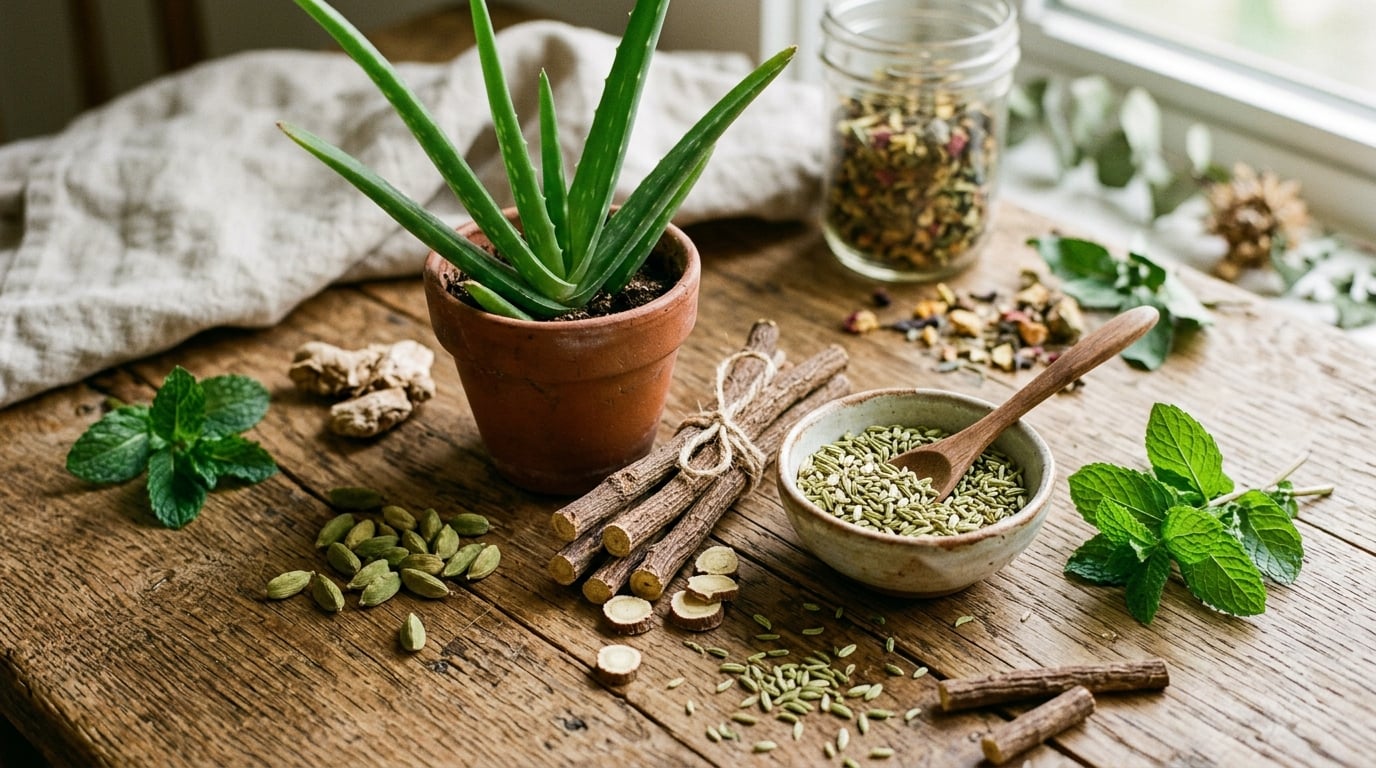
Gastroesophageal Reflux Disease (GERD), chronic hyperacidity, peptic ulcer disease, and non-ulcer dyspepsia affect millions of individuals across South Asia. Patients endure daily burning sensations behind the breastbone (heartburn), sour or bitter eructations, epigastric pain, globus sensation (a feeling of a lump in the throat), and chronic cough.
The standard medical approach relies heavily on Proton-Pump Inhibitors (PPIs such as omeprazole and pantoprazole) and H2-receptor antagonists. While these medications provide rapid symptomatic suppression by chemically shutting down gastric acid production, long-term PPI dependence is increasingly associated with impaired calcium and vitamin B12 absorption, hypomagnesemia, elevated chronic kidney disease risks, and severe rebound hypersecretion upon discontinuation.
In classical Ayurvedic gastroenterology, these conditions correspond directly to Amlapitta, detailed comprehensively in the clinical treatise Kashyapa Samhita and Madhava Nidana.
1. The Classical Pathogenesis of Amlapitta
In Ayurvedic physiology, the healthy gastric digestive fire (Pachaka Pitta) is inherently slightly sour and pungent, with a hot and sharp potency.
- **The Qualitative Derangement (Guna Dushti):**
When an individual habitually consumes foods that are excessively sour (Amla), salty (Lavana), pungent (Katu), fermented, deep-fried, or stale—combined with skipping meals, drinking alcohol, smoking, and chronic anger—the natural quality of Pitta becomes corrupted.
- Fermentation into Vidagdha Pitta: Instead of facilitating normal enzymatic digestion, the Pitta becomes excessively liquid (Drava), intensely acidic (Amla), and burning (Vidagdha).
- The Clinical Manifestations:
- Urdhwaga Amlapitta (Upward Reflux / GERD): Sour and bitter belching (Tikta-Amlodgara), retrosternal burning (Hritkantha Daha), nausea, and headache.
- Adhoga Amlapitta (Downward Acidity): Loose, burning stools, skin eruptions, and proctitis.
2. Evidence-Based Classical Gastro-Protective Formulations
Ayurvedic pharmacotherapy for Amlapitta does not aim to shut down healthy digestive acid production; rather, it neutralizes excess corrosive acidity, protects the gastric mucosal barrier, and promotes downward peristalsis (Anulomana):
- Avipattikar Churna:
- The quintessential classical formulation for Amlapitta. Combines Trikatu, Triphala, Musta, Vidanga, Cardamom, and a high proportion of Trivrit (Operculina turpethum) with unrefined cane sugar.
- Mechanism: Trivrit induces gentle, cooling downward laxation, draining accumulated fiery Pitta from the stomach into the intestines for elimination, while Musta and Cardamom coat the gastric lining.
- Kamadudha Rasa (Mukta Yukta):
- A renowned calcium- and pearl-based formulation incorporating purified pearl (Mukta Bhasma), conch shell (Shankha Bhasma), and coral (Pravala Bhasma).
- Clinical Efficacy: Acts as a potent natural, non-rebound antacid, immediately neutralizing excess hydrogen ion concentration, suppressing gastric mucosal erosion, and promoting ulcer re-epithelialization.
- Yashtimadhu (Glycyrrhiza glabra / Licorice):
- The natural bioflavonoids and glycyrrhizin stimulate gastric mucus secretion, creating a thick, protective biological barrier against corrosive hydrochloric acid and pepsin without suppressing acid synthesis.
- Sutshekhar Rasa:
- Contains purified gold, mercury, copper, and cooling herbs. Indicated in chronic, stubborn GERD with severe epigastric burning, nausea, and vomiting.
- Amalaki (Emblica officinalis):
- Uniquely, Amalaki is sour in taste yet cooling in post-digestive effect (Sheeta Virya). It is celebrated in classical texts as the premier rasayana fruit for pacifying Pitta dosha.
3. Clinical Panchakarma for Chronic GERD
- Virechana (Therapeutic Purgation): Administering gentle cooling purgatives during the autumn (Sharad) season or during acute flares flushes accumulated acidic Pitta from the hepatobiliary and gastric mucosa, resetting the digestive lining.
- Vamana Karma (Therapeutic Emesis): Indicated in Kapha-Pitta Amlapitta with severe nausea, thick white tongue coating, and recurrent vomiting of bitter fluids.
4. Dietary & Behavioral Protocols for Reflux Prevention
- Strictly Eliminate: Carbonated soft drinks, raw tomatoes, vinegar, pickles, excessive black coffee, raw garlic, deep-fried snacks, and ultra-spicy chilies.
- Beneficial Cooling Foods: Fresh coriander water, soaked raisins (Draksha), coconut water, boiled bottle gourd (Lauki), pumpkin, and moderate amounts of pure cow's milk boiled with cardamom.
- Circadian Meal Discipline:
- Never lie down immediately after a meal. Maintain an upright posture for at least 2 hours post-dinner.
- Dine at least 3 hours before sleep.
- Elevate the head of your bed by 6 inches to mechanically prevent nocturnal acid backflow.
- Avoid Drinking Large Volumes During Meals: Sip small amounts of warm water during meals to lubricate food; never gulp ice-cold water during or immediately after dining, as cold water instantly extinguishes Jatharagni.
5. Conclusion
GERD and chronic hyperacidity are fundamentally lifestyle- and diet-driven imbalances. By neutralizing toxic acidity with natural pearl-based botanicals, healing the gastric mucosa with Yashtimadhu, and establishing disciplined circadian eating habits, patients achieve lasting digestive peace without lifelong reliance on synthetic PPIs.
Tags & Categories
Read on Official Blogspot Archive
Published on drpratibhatripathi.blogspot.com with reader comments and discussions.

Clinical Practitioner
Dr. Pratibha Tripathi
Assistant Professor · PhD Scholar · Senior Ayurveda Consultant. Over 14 years integrating classical Ayurveda with modern scientific enquiry in Kathmandu, Nepal.
Medical Disclaimer: This clinical article is published for educational and awareness purposes. Please consult Dr. Pratibha Tripathi for individualized Ayurvedic diagnosis, herbal dosages, and lifestyle guidance.
Stay Updated
Receive periodic Ayurvedic research summaries, clinical insights, and seasonal wellness notes from Dr. Pratibha Tripathi.