
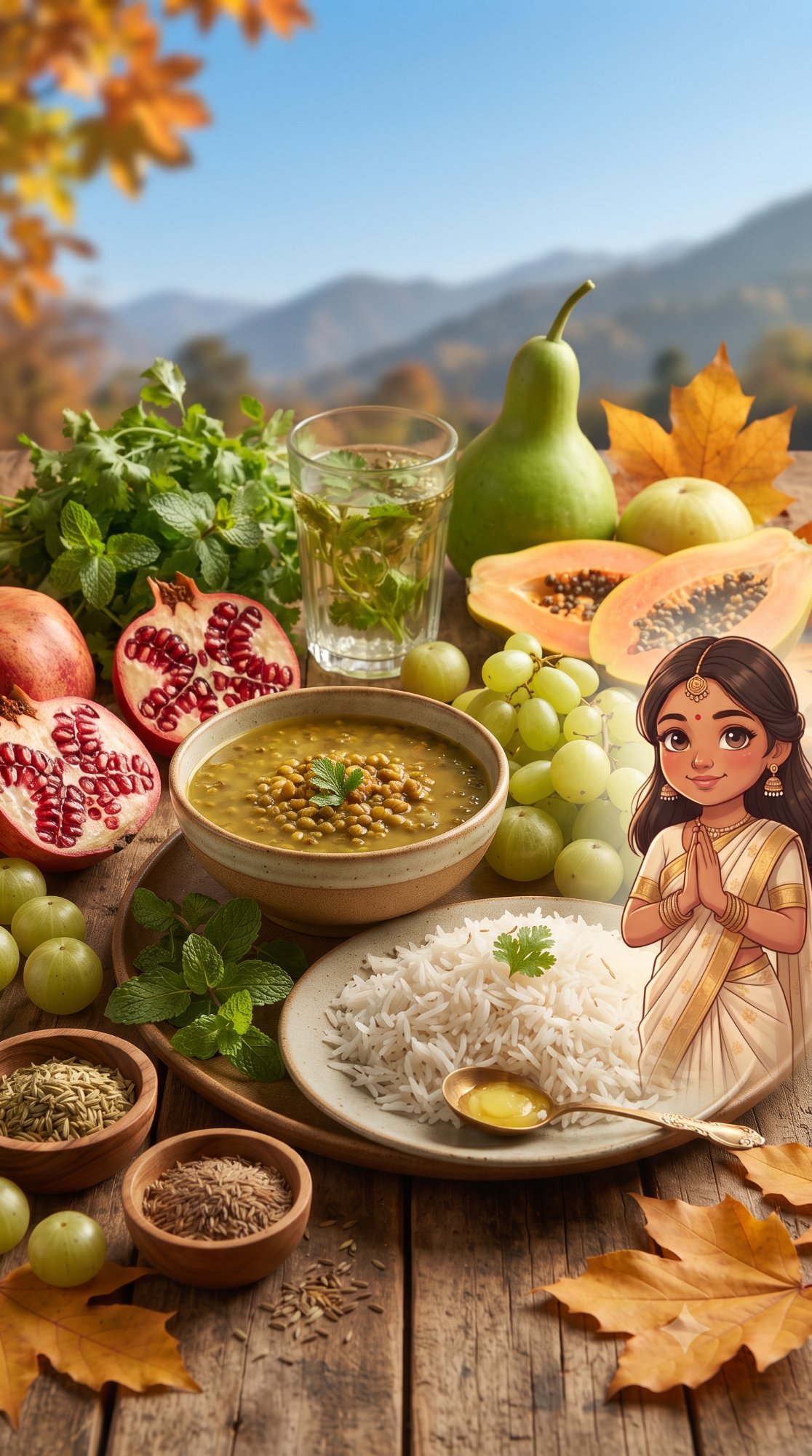
🍂 The Season of Sudden Change
The rains have ended. The sky is clear, the mornings are cool, and the afternoon sun is surprisingly sharp. It feels like the perfect season, yet this is when clinics see more acidity, heartburn, skin rashes, loose stools, and stomach infections.
This is not a coincidence. In Ayurveda, the weeks after the monsoon form a distinct season called Sharad Ritu (autumn), and it has a very specific effect on digestion.
🔬 What Happens in the Body: The Ayurvedic View
Ayurveda explains that Pitta, the principle of heat, transformation, and digestion, slowly accumulates during the humid monsoon (Varsha Ritu). When the sun returns strongly in Sharad, this stored Pitta becomes aggravated (Pitta Prakopa).
At the same time, Agni (digestive fire) is still recovering from the weak, sluggish state of the rainy season. So the body faces a double challenge:
🌧️ Monsoon ☀️ Sharad (Autumn) Agni is weak (Mandagni) Agni is recovering, but unstable Pitta accumulates Pitta becomes aggravated Heavy, damp, contaminated air and water Hot days, cool nights, strong sunlight
Common signs of aggravated Pitta in Sharad:
Sour belching and acidity Burning in the chest or stomach Excess thirst and sweating Loose, yellowish stools Skin rashes, boils, and itching Irritability and short temper 🧪 What Modern Science Adds
Several well-known seasonal patterns match what Ayurveda describes:
Post-monsoon contamination: Water sources and food are more likely to be contaminated in and after the rainy season, and waterborne illnesses such as diarrhoea, typhoid, and hepatitis A and E remain a concern in Nepal. Temperature swings: Large day-night temperature differences and changing humidity can disturb eating routines, sleep, and gut comfort. Diet and the gut: What we eat strongly shapes digestive function and the gut microbiome. Spicy, fried, and fatty food and alcohol are well known triggers for acid reflux and gastritis. Festival effect: Sharad coincides with Dashain and Tihar, when rich, oily, and sweet food is eaten in large amounts, which adds to the load on digestion.
Ayurveda and modern medicine use different language, but both point to the same practical conclusion: eat lighter, cleaner, and cooler food in this season.
🥗 Ahara: What to Eat in Sharad Ritu
Classical Ayurvedic texts advise foods that are sweet (madhura), bitter (tikta), and astringent (kashaya) in taste, and light and cooling in nature.
✅ Include
🍚 Old rice and wheat 🫘 Green gram (mudga) and light dals 🥒 Bottle gourd, pointed gourd (patola), ridge gourd, and pumpkin 🥬 Bitter and leafy greens, such as fenugreek, spinach, and bitter gourd in small amounts 🍇 Amla, pomegranate, grapes, sweet apple, and papaya 🫒 A small amount of cow’s ghee, which is cooling for Pitta 🌿 Coriander, fennel (saunf), cumin, and mint 💧 Water boiled and cooled, or stored in a clean clay pot
❌ Reduce or Avoid
🌶️ Very spicy, sour, and salty food 🍟 Deep-fried and oily dishes 🍖 Excess red meat 🥛 Curd, especially at night (it is sour and heating) 🍷 Alcohol and strong tea or coffee on an empty stomach 🧂 Pickles (achar) in large amounts ❄️ Cold drinks straight from the fridge 🌿 Vihara: Lifestyle Rules for the Season Eat only when hungry. Charaka advises taking food when real hunger arises. Never eat to a schedule alone, and never stay hungry for long, because empty-stomach Pitta irritates the stomach lining. Avoid the harsh midday sun. Ayurveda advises avoiding direct strong sunlight in Sharad. Cover your head and carry water when out. Enjoy the evening moonlight. Classical texts praise moonlit evenings in this season as cooling and calming for Pitta. Skip daytime sleep. It slows Agni and increases heaviness. Keep an early dinner. Eat light and early, at least 2 to 3 hours before sleep. Practice calming habits. Gentle yoga, slow breathing (Sheetali and Chandra Bhedana pranayama), and a short evening walk help cool both body and mind. 🍵 Simple Home Remedies for Pitta Season Coriander-fennel water: Soak 1 teaspoon each of coriander seeds and fennel seeds in a glass of water overnight. Strain and sip in the morning. Amla: Fresh amla, or 1 teaspoon of amla powder with water, supports digestion and cools Pitta. Rose or mint water: A light cooling drink for hot afternoons. Warm water with a pinch of cumin: Sip after meals for gas and heaviness.
Note: Home remedies support healthy digestion but do not replace medical treatment for ongoing symptoms.
🚰 Safe Food and Water: A Post-Monsoon Must Drink only boiled, filtered, or treated water Wash fruits and vegetables thoroughly Eat freshly cooked, warm food and avoid stale leftovers Wash hands with soap before eating and cooking Be careful with street food, open cut fruit, and uncovered food 🚨 When to See a Doctor
Please do not self-treat if you have:
Burning or pain in the stomach that lasts more than a week or keeps returning Repeated vomiting, black stool, or blood in vomit or stool Severe diarrhoea with weakness, dry mouth, or fever Yellowing of the eyes or skin Unexplained weight loss or difficulty swallowing
Visit the nearest health facility without delay.
🌼 Takeaway
Sharad Ritu is a beautiful season, but it asks us to eat and live in tune with it. Choose light, cool, and fresh food, drink clean water, avoid excess spice and oil, and listen to your hunger. When you align with the season, your digestion stays strong and your body is well prepared for the winter ahead.
Eat with the season. Live in balance. 🍃
This article is for general health awareness and does not replace the advice of your doctor.
#SharadRitu #Ritucharya #AyurvedaAutumn #PittaBalance #DigestiveHealth #GutHealth #AgniAndDigestion #SeasonalEating #AyurvedaNepal #Swasthavritta #DrPratibhaTripathi #AharaVihara #AcidityRelief #PostMonsoonHealth #HealthyLivingNepal #PreventiveHealth #AyurvedaWisdom #EatWithTheSeason
Tags & Categories
Read on Official Blogspot Archive
Published on drpratibhatripathi.blogspot.com with reader comments and discussions.

Clinical Practitioner
Dr. Pratibha Tripathi
Assistant Professor · PhD Scholar · Senior Ayurveda Consultant. Over 14 years integrating classical Ayurveda with modern scientific enquiry in Kathmandu, Nepal.
Medical Disclaimer: This clinical article is published for educational and awareness purposes. Please consult Dr. Pratibha Tripathi for individualized Ayurvedic diagnosis, herbal dosages, and lifestyle guidance.
Stay Updated
Receive periodic Ayurvedic research summaries, clinical insights, and seasonal wellness notes from Dr. Pratibha Tripathi.